The Power of Expression (2)
Healthy ways of self-expression
Reading time: 11 minutes
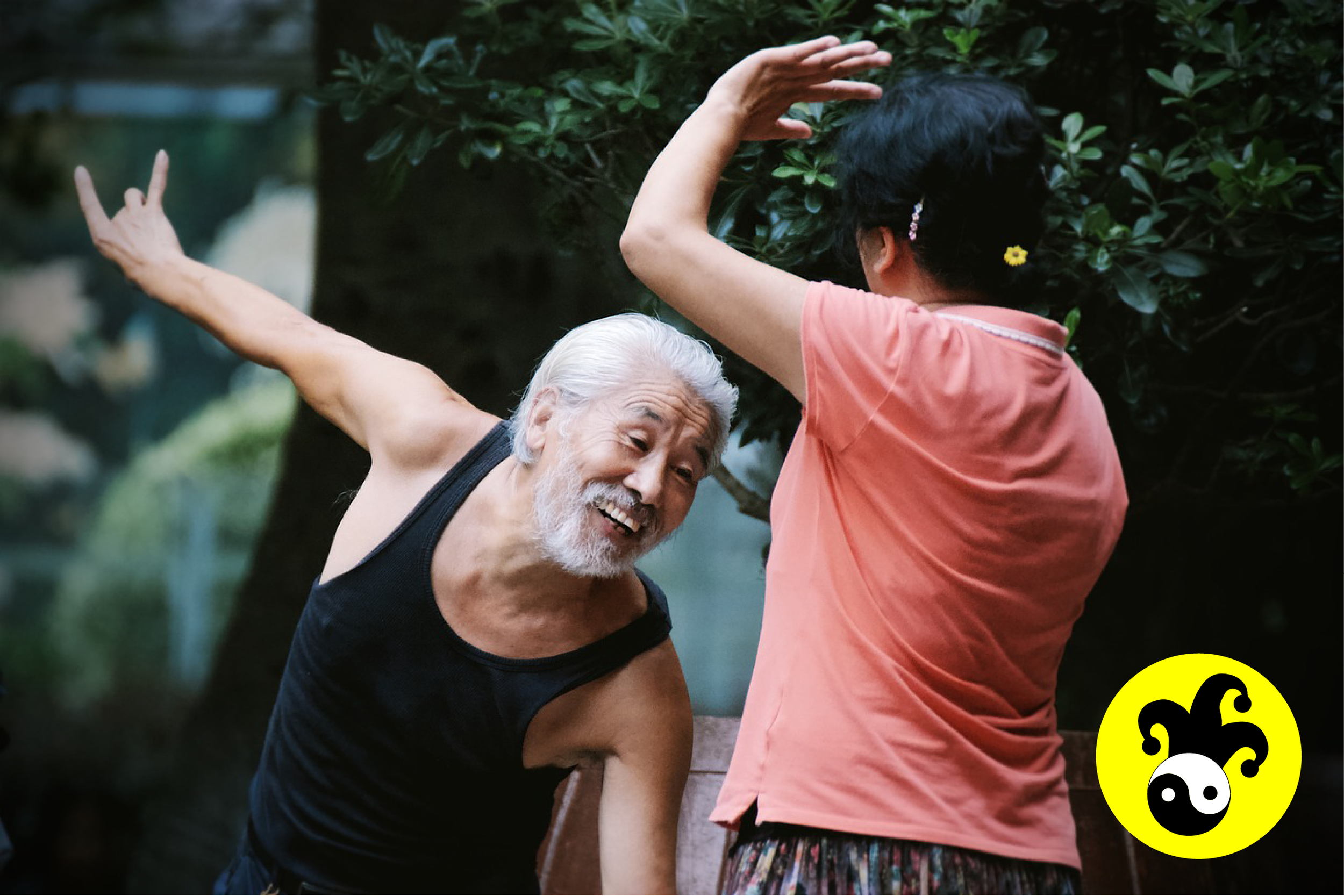
Image: qgadrian
Having elaborated in the first part of this diptych on energy leaking and possible injurious ways of expression, let’s now move to the ones with potential healing power.
The arts are by default connected to feelings and emotions. If we love cinema or theatre and we want to go for a laugh, we watch a comedy. If we want excitement we go for an adventure. And if we feel melancholy, we see a tragedy.
In the same way music touches our hearts rather than our rational minds, and the same goes for paintings, sculptures, dance, poetry & literature, architecture, etc. That is because these art forms emerge from some other place than our rational, distinguishing minds. That is to say, they come from the place where those oh so recognizable and universal human traits like love, compassion, hatred, beauty, greed, romance, cunning, pride, humility, lust, grief and charity emerge from.
The artist, by expressing him- or herself through their chosen art, therefore speaks directly to our hearts where our innermost humanity dwells, where true Love and compassion for ourselves and every being rule, and where our connection (or: oneness) with the universe can be experienced. It is like Dr. John Keating says in the sublime movie Dead Poets Society:
“Medicine, law, business, engineering, these are noble pursuits and necessary to sustain life. But poetry, romance, beauty, love, that’s what we stay alive for.”[4]
That is why art has the potential to touch people of all races and classes, whether we’re touched by our own expression or by the expression of others.
The touching has to do with the fact that anyone using an art form as a means of expression, is putting up their soul for display – even if it’s only for ourselves. For if we want anything to be meaningful, it has to come from our inner core.
We have to open ourselves up to our whole being, not just the intellectually fabricated one that we post on social media.[5] That means opening up to, getting in touch with, and embracing our shadow side, our faults, habits, rascalities, and obscenities.
That might seem difficult at first. But if we decide to go on that path and allow ourselves to express our being human in the broadest sense of the word, the rewards are nothing short of mesmerizing. Allow me to share a personal story where the art of theatre provided a breakthrough I could never have imagined.
A few years ago I had the honour of helping interdisciplinary artist Frouwke Florentina and the wonderfully creative Afra Leydelmeijer to create their performance ‘Will You Sit With Me.’ As part of the rehearsals, Frouwke was teaching us how to get in touch with our innermost emotions by means of so called ‘interviews.’ Frouwke would ask us questions and we were allowed to express ourselves in any way, except using words and language.
One of the first times I went through this, Frouwke and I were in a large theatre rehearsal room. During the interview the main emotion which emerged had been: rage.
She then positioned me in the middle of the room and invited me to express my rage by means of movement and sound; my body could literally do anything it felt like, except using language.
I remember vividly thinking the first few minutes: “Okay, now what. What is expected of me? Should I move? Not move? This is really silly. What am I doing here?”
As is obvious, my rational mind tried to come up with explanations for something that was happening outside of its realm, hence the deep feeling of uneasiness. Yet I kept standing where I stood and after about five minutes the thinking faded into the background. Then there were a few moments of stillness.
Suddenly, as being struck by lightning, movement began to happen. I flew from left to right, delivering punches and receiving them, releasing primal screams, waving my arms around like an African shaman during a ritual dance, alternated with dry vomiting and cries and sobs which seemed to emerge from an abyss that went beyond the lowest hells of Dante’s Inferno.
It was an expression of pure emotion, pure feeling, and it was as if my body and therewith my whole being finally felt liberated from the chains of social repression I had felt bound by all these years.
I moved from what looked like dancing to fighting to jumping to climbing to walking on all fours and every imaginable movement in between, combined with sounds I didn’t even know were human. After about fifteen or twenty minutes I fell down on the ground, completely exhausted…
Yet feeling light as a feather.

Afra (l) and Frouwke during their performance ‘Will You Sit With Me?’
Video still: Bob Schellens
How come I felt as if a backpack with fifty kilograms of bricks had been lifted off my back? Most importantly: I was very aware of having made the decision to participate in this exercise/experiment. There was an openness for something unknown to happen, to get acquainted with an as yet mysterious part of my being, however it was going to turn out.
To a lot of people my uncontrolled outburst of movement and sound might have proven silly or even intimidating, but that is only because there is still a deep (often hidden or repressed) anxiety to experience themselves fully. And truth be told, I don’t know if I could have done it without my love for self-inquiry which was ignited well over 18 years ago. Yet, by allowing the non-rational part of myself full and limitless time and space to express, a liberating feeling of wholeness was experienced: a total embrace of both my dark and light aspects, the yin and yang making the circle whole.
Moreover, that feeling was enhanced by the fact that someone other than me had been watching the entire performance.
Frouwke had been a silent and objective observer to my ‘tantrum.’ The fact that I had dared to ‘let myself go’ in the way I did and even in front of someone else felt mighty strong, for obviously there was no more shame of my dark side – at least not in that moment. Therefore the experience turned out to be incredibly cathartic, healing and strengthening, both physically as well as mentally.
Therein, for me, lies the healing power of the arts – whether we use it as an expression for ourselves or share it with others. It provides us with the opportunity to get in touch with that unknown, unconscious, mysterious part of us which at the same time is exactly the part that makes us human.
Another typical human characteristic is that somewhere in life we become aware of stumbling onto psychological blocks. These come often into our awareness for instance in patterns of failed or destructive relationships, work related stress, depression or anxiety, or issues around self-identity and sexuality.
The repetition with which we appear to end up continuously in similar kinds of situations, or where we incessantly meet similar types of people, presents that gnawing feeling of being stuck in a time-loop.
We become aware of our vicious circle when a threshold has been reached pointing out the senselessness of it all, and we begin to wonder about our own contribution to ceaselessly ending up in déjà-vus. That marks the beginning of examining our own unconscious habitual patterns and the ways in which we express them, often with the help of some or other therapy.
But it takes an incredible amount of courage to shine a spotlight on our unconscious behaviors. Because now we open ourselves up to the possibility of encountering behaviors we are ashamed of or feel guilty about, and these are more often than not accompanied by extremely unpleasant sensations in the body. It is precisely for this reason that they have been suppressed up to that moment, because we do not want to feel that pain at all. But the key to its liberation lies precisely in acknowledging and accepting that pain.
After a colossal collision between me and my beloved ex-wife back in 2006, it became apparent that certain of my habitual behaviours kept me stuck in a time-loop. One of them being my tendency to downplay of a lot of painful memories which emerged with varying frequencies of recurrence. That very fact points out their significance for me, but because of the emotional pain attached to them they were either repressed or downplayed.
Because the strong feeling arose that the memories I feared were actually trying to communicate with me, I decided to write them down. By taking them out of my head and making them ‘real’ by entrusting them to paper, I felt that they were receiving the recognition they sought through their continuous repetition. Moreover, there was a deep, visceral conviction—not rational—that my acknowledgment of them would be useful, even though it was not yet entirely clear how.
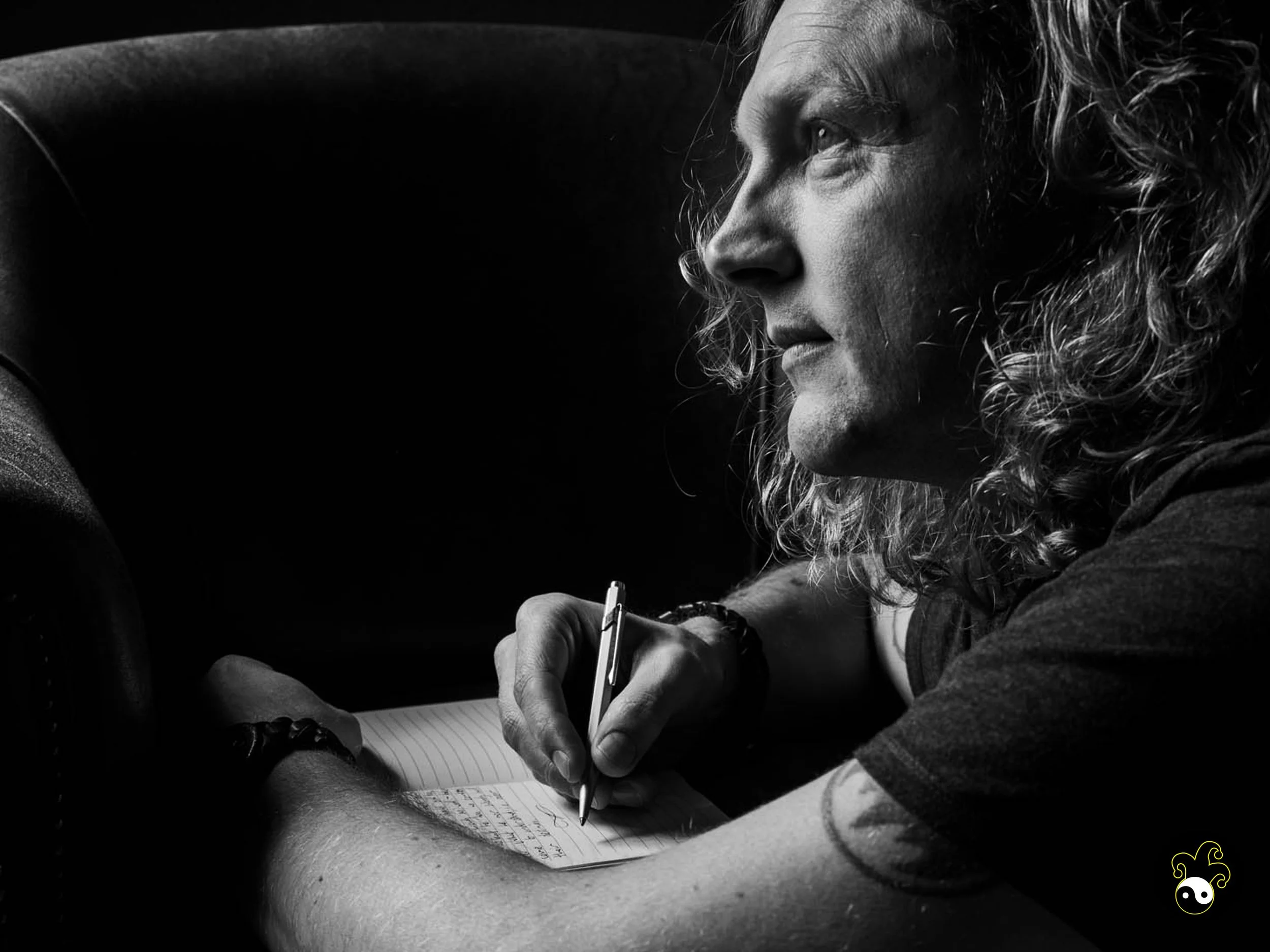
Here’s one such traumatic memory which was deeply engraved in my memory and reared its head more and more often.
At the age of 17 I was walking on the premises of my high school towards the entrance, as I passed a group of the ‘popular’ girls. I never considered myself a popular guy and was actually rather shy (a trait I tried to mask with a very big mouth and acting like a clown). With some of them I was more or less befriended, so I looked in their direction while walking by.
Now, one of them had doubled a class and was a year older than me. She was rather vocal about her sexual escapades and I overheard her complaining about ‘not having had any’ in the previous weekend. Right at the moment when I passed the group, one of the other girls jokingly said: “Well, why don’t you try Erik?” In reply, she looked me straight in the face and said: “Please, I’m not that desperate.” Naturally I walked on and pretended nothing had happened.[6]
The fact was, however, that this seemingly insignificant incident had inflicted a deep wound on my soul. At that moment, I did everything I could to avoid letting on how hard her words had hit me and how they were undermining my self-confidence.
So when I had committed these and many similar memories to paper, it initially caused all sorts of interesting forms of nausea and cramps, especially during rereading. But as the writing progressed, something interesting and unexpected began to happen: the more of these memories were written down and the more often they were read, the less nausea and cramps arose!
After two months, two diaries were filled with anxious memories. But by making them real—that is, by giving them a solid form through the words in which they were written—I acknowledged and embraced them fully.
If we were put this into an image, it would look something like this:
When the occurrence happened at age 17, I repressed the accompanying emotions. Afterwards I kept repressing them every time the button was pushed to which this particular memory was attached.
However, that button was actually pushed by my 17-year-old-me, who would appear and beg to be allowed to express the pain he had felt when that girl made that remark so many years ago. But every time I suppressed the memory, I was in fact pushing myself away; I was splitting myself and pushing my 17-year-old-me as far away from me as possible. By downplaying or suppressing the memory, I was effectively blaming my 17-year-old self for my stress response and the accompanying unpleasant bodily sensations.
Every time I push away my 17-year-old-me — which happens when the memory is suppressed or trivialized — its emotional charge grows. So, by the time the memory was written down, it already carried an enormous, explosive charge. That makes acknowledgment difficult because I know deep down that it will be accompanied by brutal, unpleasant bodily sensations. As stated earlier, that is precisely where the key to liberation from the power of the traumatic memory lies.
Here’s how I experienced that:
By writing down the memory, I activated my stress response. But instead of pushing away my 17-year-old-me, this time I opened my arms and invited him in for a big hug. His first reaction, however, was intense rage because I had neglected him for so many years, and he started kicking, hitting, insulting, and screaming at me. This manifested in various forms of nausea and other extremely unpleasant symptoms of my stress response.
However, by allowing him (my 17-year-old-me) to express his incredible pain through my (current adult me) nausea and other unpleasant bodily sensations, the memory was mentally digested.[7] Because by persisting, by allowing him to cause this great nausea and hit me while still holding my inviting arms open for him, his anger eventually subsided. That anger temporarily turned into intense sadness and crying fits, but ultimately there was relief and joy that he was finally seen and that his pain was allowed to be there in all the intensity of my unpleasant bodily sensations.
It was at that moment that he and I merged. The painful emotion of the memory had been digested and lost its harmful power, which manifested in the disappearance of all forms of agitation from my body and mind. The emotional charge of the memory vanished, as did the emotional button connected to it. The memory was now merely a neutral memory and no longer had power over my thoughts and actions.
That’s what is meant with the healing power of expression.
Jolly greetings,
Erik
Notes
[4] Dr. Keating was performed by the brilliant late Robin Williams.
[5] Immediately it becomes apparent that the difference between (intellectually) contrived art and true art can easily be distinguished, for the former will never be able to touch our soul and make a connection with our hearts.
[6] This is a clear example of repression of my emotions – remember the pressure cooker from part 1.
[7] Just as undigested food that gets stuck in our stomach will rot, so will undigested memories stuck in our brain rot as well.